Demographic Variations in Preferred Game Combinations Involving Slots, Table Games, and Event Betting on Digital Platforms
Written by Katja Simon · Jul 30, 2026
Demographic Variations in Preferred Game Combinations Involving Slots, Table Games, and Event Betting on Digital Platforms
Patterns in digital gaming reveal clear demographic differences in how players combine slots, table games, and event betting across platforms, and data collected through mid-2026 continues to highlight these distinctions by age, gender, region, and income level. Recent figures from July 2026 show sustained growth in online participation, where certain groups favor specific mixes while others maintain narrower selections.
Age-Based Preferences in Game Combinations
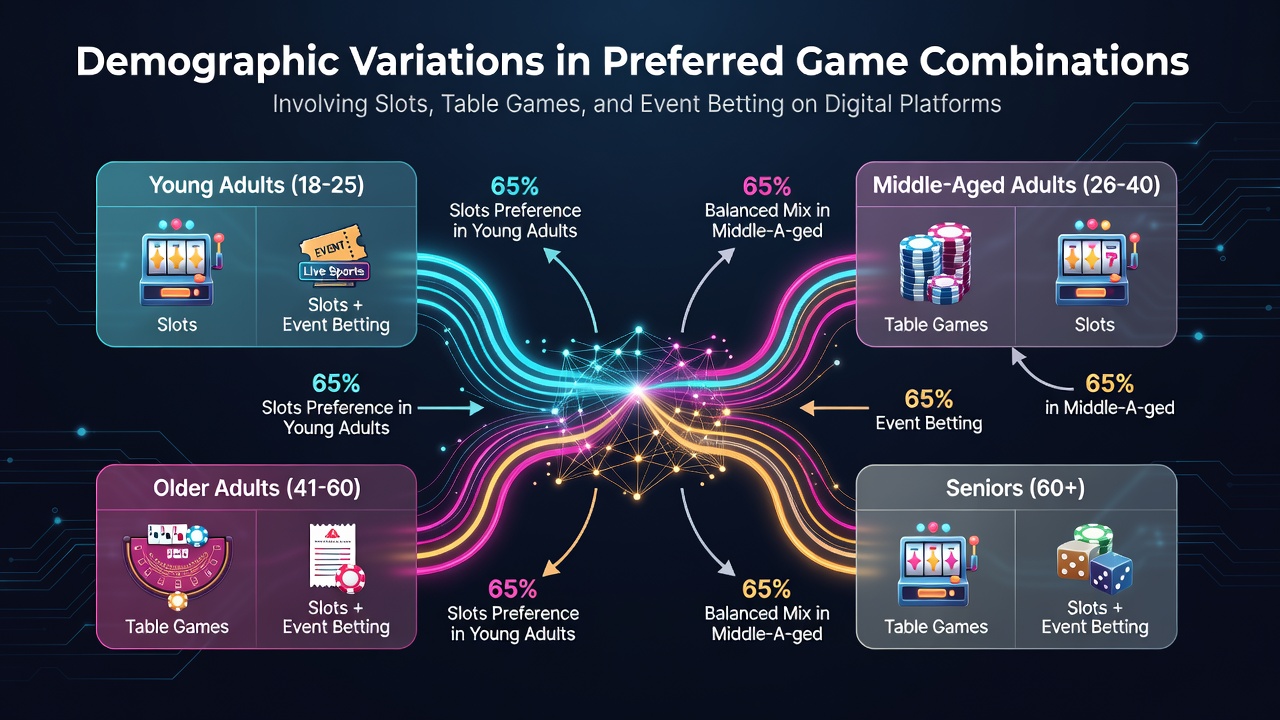
Younger adults between 21 and 35 demonstrate higher rates of multi-game engagement, frequently rotating between slots sessions and live table games before shifting to event betting on the same platform. Studies tracking user behavior indicate that this age bracket often uses slots as entry points that lead into table game strategies, which then connect to real-time betting markets during major sports events. In contrast, players aged 36 to 50 tend to separate their activities more distinctly, with many maintaining dedicated slots play during weekday evenings and reserving table games plus event betting for weekend blocks. Data shows older participants over 51 lean toward single-category focus, where slots dominate and combinations with table games or event betting occur less frequently.
Gender Differences in Platform Activity
Research from industry reports finds that male players more commonly link slots play directly to event betting, creating sequences where quick spins transition into live odds adjustments during matches. Female participants show stronger tendencies to pair table games with slots, particularly in formats that allow progressive jackpots alongside blackjack or roulette sessions. These patterns hold across multiple jurisdictions, though exact ratios vary by region and platform design. Observers note that gender-based variations also appear in session length, with women extending combined slots and table game time while men more often alternate rapidly between those options and betting markets.
Regional and Geographic Influences
North American markets display distinct combinations compared to European or Asian platforms, where regulatory frameworks shape available options. In the United States, state-level data from 2026 indicates that players in established markets frequently combine slots with sports event betting, especially during football and basketball seasons. Canadian provinces report similar trends, yet with greater emphasis on table game integration among urban demographics. Australian operators have documented rising interest in event betting paired with slots among regional users, while European platforms show stronger table game emphasis overall. These geographic differences influence how platforms structure loyalty programs and promotional offers to match local preferences.
Income and Spending Patterns
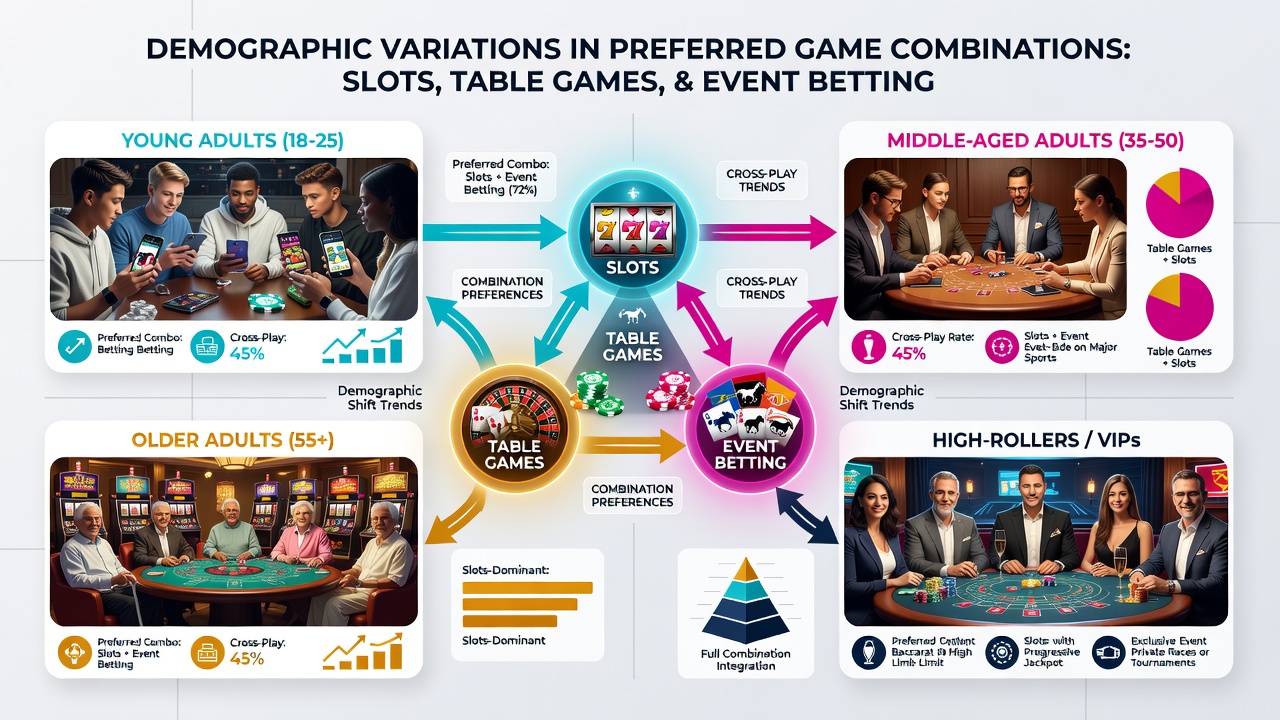
Income levels correlate with the complexity of game combinations selected by users. Higher-income groups more readily engage in all three categories within single sessions, moving from slots to table games and then into event betting as their activity progresses. Mid-range income participants often limit combinations to two categories, typically slots paired with either table games or event betting depending on available time and platform features. Lower-income users show preference for slots-dominant activity, with occasional additions of table games but limited crossover into event betting. Transaction data from July 2026 confirms these spending tiers remain consistent across major digital operators.
Platform Design and Demographic Response
Digital platforms have adapted interfaces to accommodate observed demographic patterns, offering bundled game access that appeals to multi-category users while maintaining clear navigation for single-focus players. Mobile applications in particular facilitate quick switches between slots, table games, and event betting, which aligns with younger demographics' documented behavior. Desktop platforms continue to serve older users who prefer extended sessions in fewer categories. Payment and reward systems also reflect these variations, with bonus structures designed to encourage specific combinations based on user location and age data.
Conclusion
Demographic factors continue to shape how players combine slots, table games, and event betting on digital platforms, with clear distinctions emerging across age groups, genders, regions, and income brackets. July 2026 figures reinforce that these patterns remain stable while overall participation grows, allowing operators to refine offerings based on established user behaviors rather than assumptions. Continued tracking through regulatory and industry sources will provide further clarity on how these combinations evolve in coming periods.